Seasonal Otter Watching: A Month-by-Month UK Guide
An otter is rarely the thing you actually see. It is the ring spreading across a pool where no fish rose, a line of five-toed prints in mud that was smooth an hour ago, a smear of black spraint on a boulder under a bridge. Watching otters well means learning the year as much as the animal: what they are eating, where they are lying up, and how much of the day they are willing to be abroad. This guide walks through the seasons in turn.
Why the Calendar Matters
Otters do not hibernate and they do not migrate. In Britain they can breed at almost any time of year, though many litters arrive in spring and summer, and cubs stay with their mother for the best part of a year. What changes is how visible they are.
Water levels, temperature, food and disturbance all shift an otter's day. Long, cold nights make daytime hunting worthwhile in winter. Warm, busy summer evenings push them into the small hours. Floods wash away tracks and spraints; low water preserves prints beautifully. Read those signals together and you can plan a trip with a real chance rather than a hopeful one.
Winter: December to February
Winter is the season of swollen rivers. After heavy rain, spraints and prints vanish within hours, so look instead at features that stay above the flood: bridge ledges, culvert mouths, stone revetments, the tops of boulders. Otters habitually mark in such places, and a fresh spraint on a ledge well above the current tells you an animal has passed recently.
Snow is a gift. A single fall will show you exactly where an otter travelled, with the characteristic bounding gait and the smooth drag of a slide down a bank into the water. Hard frosts push animals towards smaller waters that stay open — spring-fed streams, ditches, gravel pits — and on quiet stretches a mid-morning otter is perfectly possible in January.
Spring: March to May
Spring is family season. Mothers with cubs hunt hard, and from April the cubs themselves begin to show, tumbling at the water's edge while she fishes. Listen at dusk for the sharp whistle that keeps a family together; it carries further than you would expect and is often the first sign that more than one otter is present.
Frogs and toads spawn in March, and otters take advantage on ponds and marshy edges. On rivers, watch riffles and the heads of pools where fish feed in warming water. Spring also brings a burst of marking: once the floods have gone, spraints reappear on the familiar stones. Cubs are vulnerable, though, so keep your distance and keep it brief.
Summer: June to August
Summer is the hardest season on lowland rivers and the easiest on the coast. With flows low and weed thick, prints survive beautifully in mud: five toes, a broad pad, often claw marks in soft going. Slides — smoothed chutes down a steep bank — are obvious now, and show exactly where an otter enters the water.
Nights are short, so otters compress their activity into the hour either side of dark, and on busy rivers they may not show until well after midnight. This is when coastal otters come into their own. In Shetland, Mull, Skye and along the west coast they feed in sea lochs on the tide and are often active in daylight; an early-morning watch over kelp and rocky shore is your best chance in Britain of a long view.
Autumn: September to November
Autumn is about movement. Young otters disperse in search of territories, and adults re-mark boundaries as the rains return. Falling leaves open up the bank and reveal runs and flattened paths where animals regularly leave the water.
Where salmon and sea trout run — many rivers in Scotland, Wales and northern England — otters follow the fish to holding pools and spawning gravels. Look for dragged-out carcasses and loose scales on the bank, though foxes and gulls get there too. Eels on the move are another important autumn food. After the first proper wet spell, walk the stretch again: the spraints will tell you where the animals have been.
Signs to Look For
You will find otters far more often by their marks than by sight. Work through these on any new stretch.
- Spraint. Dark and tarry, often full of fish bones and scales, left on flat stones, bridge ledges and grass tussocks. The smell is distinctive: fishy, but sweet, a little like hay. Wet and shiny means today's.
- Prints. Five toes and a wide pad; claws show in mud but not on firm ground. Mink prints are smaller and neater.
- Slides and runs. Smooth chutes down steep banks; narrow flattened paths through vegetation leading to the water.
- Holts and couches. Root balls, rock crevices, drystone walls, undercut banks, dense scrub. Note them, leave them alone.
- Anal jelly. A small, clear, jelly-like deposit on a stone. Easy to overlook, and a reliable confirmation.
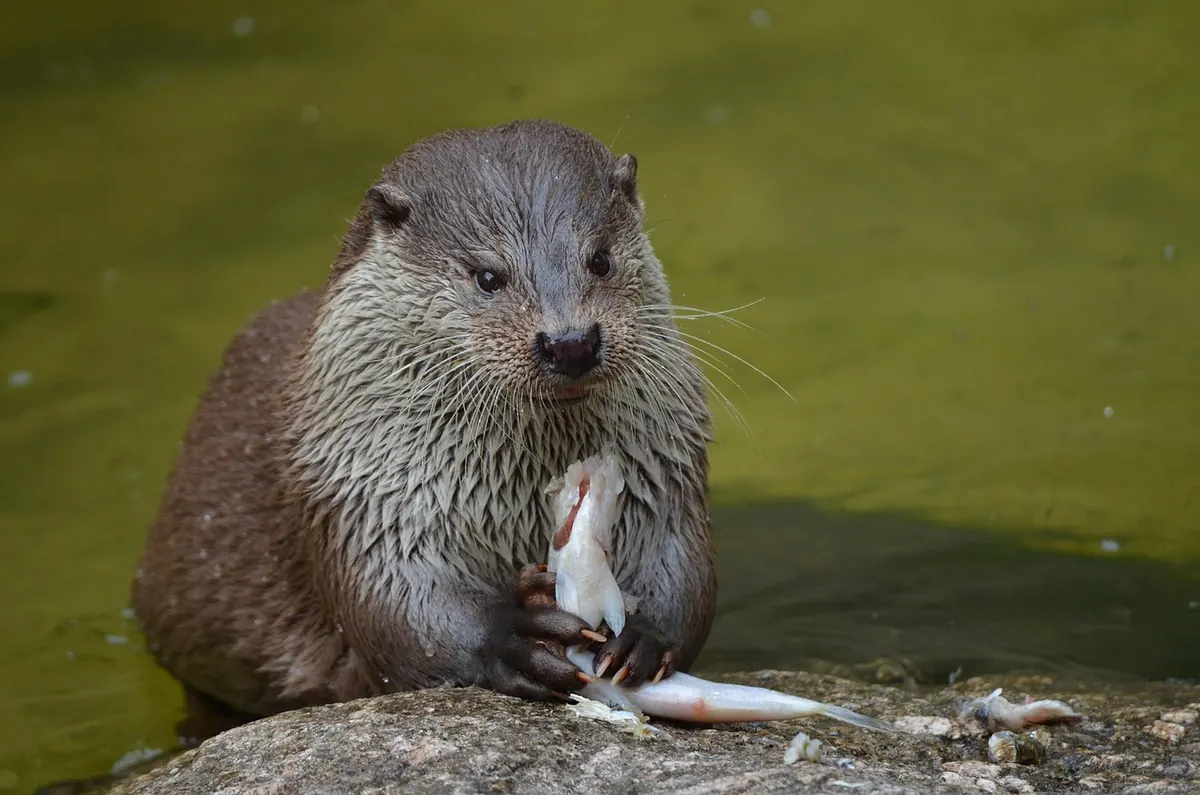
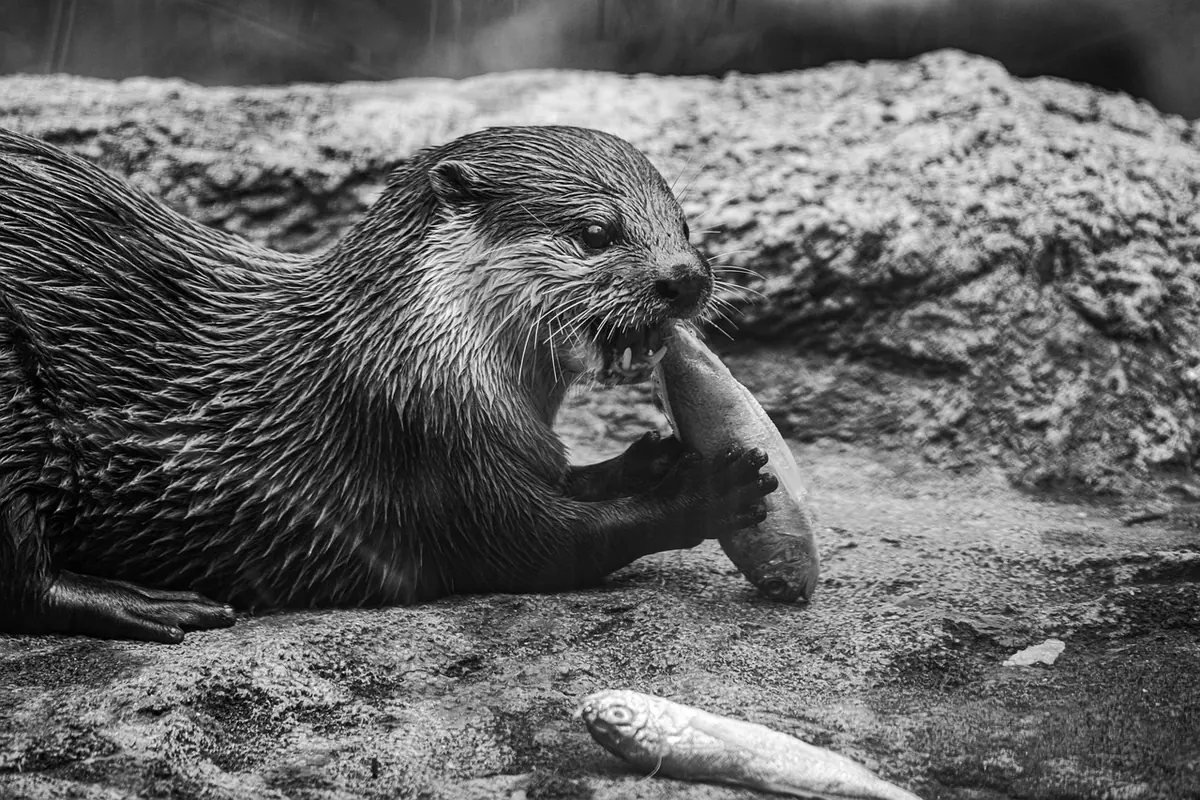
- Feeding remains. Fish heads, scales, feathers, frog legs and the odd crab shell on flat rocks or gravel bars.
- Sound. The whistle between mother and cub; a soft explosive puff when an otter is startled.
Practical Fieldcraft
A few habits turn a hopeful wander into a realistic chance.
- Go at the edges of the day and stay put. Otters cover a lot of water; a quiet watcher at a likely bend sees more than someone walking the whole stretch.
- Approach upstream with the wind in your face, keep low, and stop often to scan well ahead.
- Use a torch with a red filter, low and brief. A direct white beam ends the encounter.
- Watch the water's edge, not the middle of the river. A hunting otter surfaces often but briefly: look for the ring and the wake.
- Keep dogs on a lead near water, and give holts and family groups a wide berth, especially from spring through to late summer.
Otters and their holts are protected by law across the UK, and disturbance is an offence; if your presence changes an animal's behaviour, you are too close. A short, quiet sighting beats a photograph, and a record sent to your county recorder, local wildlife trust or iRecord is worth more still — those records feed the surveys that track how otters are faring. Winter banks are cold, slippery and prone to flooding, so check the forecast, tell someone where you are going, and do not wade alone.
Photo: 硝破 / Pixabay