A Beginner's Guide to Ethical Otter Watching in the UK
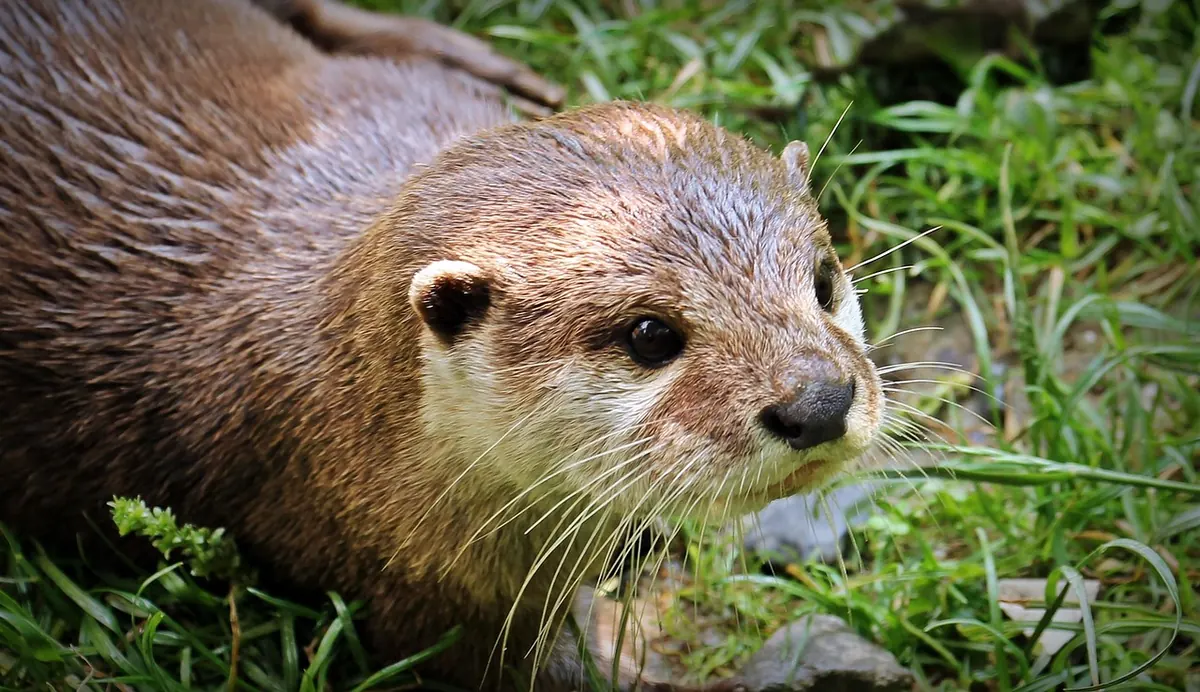
An otter slipping through a river at dusk is one of the finest sights in Britain, and finding one no longer means travelling to the far north-west. Otters have returned to most English counties. They turn up in city canals, on tidal mudflats, in lowland lakes and along rocky coasts. The hard part is still the watching: they are shy, largely nocturnal, and they know their stretch of water far better than you do.
What separates a good encounter from a bad one is rarely luck. It is fieldcraft — reading the signs, choosing the right hour and being willing to sit still and stay back. Get those right and you will see more, not less.
Learning to Read a River
Before you try to see an otter, learn to see where it has been. Spend a few walks looking only at the ground and the water's edge rather than at the water itself.
- Spraints. Otter droppings are dark and tarry, often full of fish bones and scales, and are left in obvious places: flat stones, ledges under bridges, the tops of tussocks. They smell sweet and musky, a little like hay. Finding fresh spraint means an otter is using that stretch regularly.
- Footprints. Look in soft mud, sand and silt. An otter print shows five toes and a broad pad, sometimes with a smear where the webbing has dragged. Dog prints are usually narrower and show claw marks.
- Slides and runs. Smoothed, mud-slick channels down a bank, often where the bank is steep or under a bridge, mark places otters enter and leave the water.
- Holts and couches. Holes under tree roots, gaps in rock armour, dense reed beds and log piles may be resting places. Never approach, block or enter one.
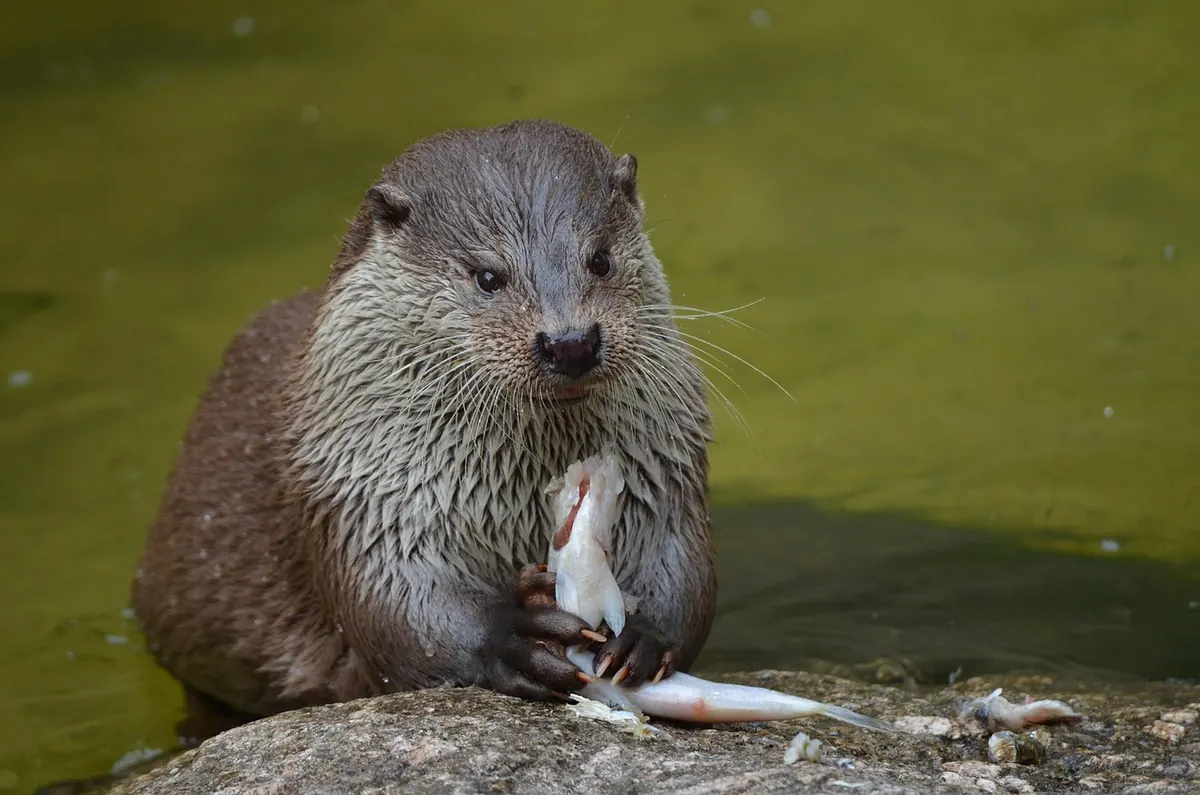
- Feeding remains. A fish with a neat bite taken out of the shoulder, left on a flat stone or a jetty, is a strong clue.
One warning: feral American mink leave similar tracks in similar places. Mink are smaller and darker, usually without the pale throat patch, and they move with a low, bounding run rather than the fluid, humped swim of an otter.
Timing: Dawn, Dusk and the Tide
Otters are most active in the hours around first light and last light, when fish move and people do not. That said, they are opportunists. In winter, when nights are long and food is harder to come by, daytime activity increases. In summer, a female with cubs may be out in the middle of the afternoon because she has no choice.
On the coast and in estuaries, the tide matters more than the clock. Otters hunt the mudflats as the water drops and the channels empty. Work the two hours either side of low tide and you will often be looking at water they are actually using.
Whatever the hour, plan to stay put. Half an hour is a stroll; two hours is a watch. Bring a flask, sit somewhere comfortable, and let the site come to you.
Fieldcraft: Distance, Cover and Scent
If an otter has stopped what it was doing to look at you, you are already closer than you should be.
In open water, 20 to 30 metres is a sensible working minimum. Give a mother with cubs 50 metres or more, and leave entirely if a cub is present — a disturbed family can abandon a holt. Use binoculars, not your feet, to get closer.
Approach along the bank rather than down it, keeping vegetation or a hedge between you and the water. Never walk a skyline. Stay low, move slowly, and stop completely when the otter surfaces. Wear dull, quiet clothing, leave the strong scents and rustling waterproofs at home, and keep the wind in your favour — otters have an excellent sense of smell, and your scent arriving before you is the fastest way to empty a stretch of river.
Watch for the signals that you have overstepped:
- The otter stops feeding and stares in your direction.
- It snorts, hisses or slaps the water.
- It changes course deliberately to keep away from the bank you are on.
- It carries a cub or moves a cub away from you.
- It vanishes and does not resurface within a reasonable distance.
Any of these means back off quietly and give it ten minutes.
Light: Work With It, Don't Fight It
Otter watching is largely a low-light activity, which is why a pair of 8x42 binoculars is worth more than any camera. They gather light your eyes cannot, and they let you stay at a proper distance.
Torches are usually a mistake. A sudden beam will send an otter under, and repeated exposure can push it off a productive stretch of water. Red filters reduce the disturbance but do not remove it; wildlife researchers use them sparingly and only for short observations, and there is no good reason for a casual watcher to lamp an otter at all. If you must use light, keep it brief, keep it red, and never point it at an animal that is feeding.
Photography Without a Price
Good otter photographs come from patience and fieldcraft, not from pressure.
- No flash. It is startling, it ruins the moment and it may push an otter away from a feeding site it needs.
- Use a long lens and a high ISO. Accept grain and noise. A slightly soft image taken at 40 metres is worth more than a sharp one taken at five.
- Do not bait, call or use playback. Drawing an otter in with fish or recorded calls changes its behaviour for your benefit.
- Leave the drone at home. Aerial approaches are stressful and, on many reserves and sensitive sites, prohibited.
- Take the shot you are given, then withdraw. If the otter is comfortable, stay. If it is not, put the camera down and walk away.
Share the Place, Not the Pin
Social media has made otter watching harder. A photograph posted with a precise location can send a steady stream of people to a single holt within days. Describe the general area — a river, a county, a reserve — and keep exact spots to yourself. The same applies to cubs: never post images that show a den site or a family group with identifiable landmarks.
Do report your sightings to your local environmental records centre or county wildlife trust, which is how otter distribution is actually monitored. Report the animal, not the holt.
A Short Checklist Before You Set Off
- Check the tide or the forecast, and choose dawn, dusk or a settled winter afternoon.
- Confirm you are on a public right of way, a permissive path or land where you have permission.
- Pack binoculars, dull clothing, a flask and something dry to sit on.
- Leave the dog at home, or keep it on a lead well away from the water.
- Sit still for at least an hour before deciding there are no otters about.
- Keep 20 to 30 metres from an adult, more from a family, and retreat at the first sign of disturbance.
- Record what you saw, then go home and tell nobody the exact grid reference.
Otters are protected by law throughout the UK, and disturbing one at a resting place is an offence — in England and Wales under the Wildlife and Countryside Act 1981, with equivalent protection in Scotland and Northern Ireland, plus their status as a European protected species. That protection is not a technicality; it is the reason otters are back on our rivers at all. If you are unsure whether an activity is permitted, check with the relevant statutory body for your nation — Natural England, Natural Resources Wales, NatureScot or the Northern Ireland Environment Agency — before you go.
Photo: NoName_13 / Pixabay